All You Need to Know About Diamonds
If you’ve been spellbound by the magical beauty of diamonds, let us tell you something, you’re not alone!
But, have you ever wondered how these glistening gemstones originate and what makes them so coveted? If yes, you’re in the right spot!
In today’s blog, we’ll unleash everything you might want to know about diamonds before purchasing a diamond jewel (or simply fulfilling your thirst for learning more about them). Read on to know more!
Where Do Diamonds Originate?

As we know, diamonds are one of the hardest materials on the Earth with a solid rating of 10.0 on the Mohs scale. However, how they originate is still a mystery for many.
Contrary to the popular assumption, diamonds are NOT made from coal. It’s time that we break the common myth surrounding diamonds; that diamonds are the result of coal evolving inside the Earth under extreme heat and pressure. In reality, diamonds are much older than the Earth’s plant material, the primary ingredient for coal creation.
So, how do these glistening gemstones originate?
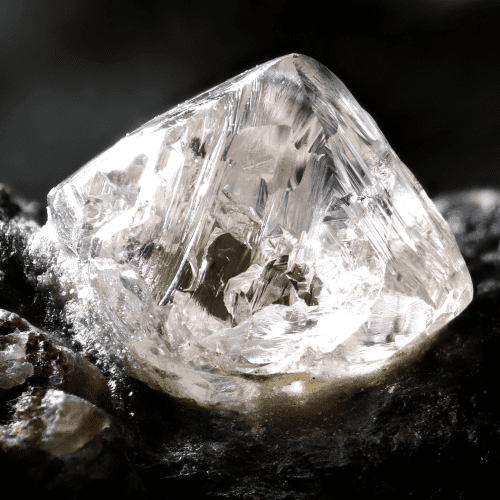
Simply put, when carbon deposits inside the crust of Earth are subject to extreme heat and temperature, it results in the formation of diamonds. In this process, some stones may take shape in a matter of days while others may take millions and billions of years to materialise.
More On Diamond History
Interestingly enough, most diamonds date back approximately 1 to 3 billion years. Also, it’s important to note that diamond formation is not an uninterrupted process. Due to a change in temperature or pressure, the diamond’s formation can be disturbed. As a result, it might have to wait for hundreds to a few million years for the conditions to become suitable for growth.
The rough diamond occurring through this process can either be colourless or coloured. During the formation of diamonds, the trace elements in the surrounding are responsible for the colour of diamonds.
Want to know the top diamond mines in the world? Read our blog on the same.
So, once the rough diamond is formed, it is brought to the Earth’s surface through volcanic activities. South Africa, Canada and Russia are the largest producers of natural diamonds globally.
With the advent of technology, today, lab-grown diamonds are also available in the market. These lab-grown diamonds have chemical and physical properties similar to natural diamonds. However, such diamonds may cost a little less than natural diamonds of the same size and quality.
Quality Factors of a Diamond- The 4Cs

In earlier times, there was no standard measure for assessing the quality of diamonds. The traders and jewellers used vague terms such as “water” and “river” to describe colourless diamonds and “Cape” for slightly yellowish diamonds. Similarly, a diamond’s cut quality was either considered “made well” or “made poorly”.
However, around the 1940s the concept of 4Cs was developed by the founders of GIA and gradually, it became the universally accepted method of assessing the quality of diamonds.
Let’s see what the 4Cs of diamonds are about.
1. Cut

The cut of a diamond is perhaps the most important in the 4Cs. It reflects how the diamond’s facets interact with light. This is determined by the various proportions, polish and overall symmetry of the diamond.
If a diamond is cut properly, it will exhibit maximum sparkle and brilliance. However, if it is cut poorly, it will seem to be dull even if it has high colour and clarity grade.
2. Clarity

Diamond clarity refers to how pure and rare the stone is based on the visibility of certain characteristics under 10-power magnification. A diamonds’ clarity directly affects its sparkle. A diamond with a lower clarity grade would have many inclusions and because of this, it will look dull and sparkless.
The diamond clarity chart is as follows:
| FL, IF | Flawless and Internally Flawless | Eye clean |
| VVS1 and VVS2 | Very Very Slightly Included | Minute characteristics are visible on close inspection |
| VS1 and VS2 | Very Slightly Included | Minor characteristics are visible |
| SI1 and SI2 | Slightly Included | Characteristics are noticeable |
| I1, I2, I3 | Included | Characteristics are obvious |
3. Colour

Colour refers to the natural tint present in diamonds. Usually, almost all diamonds have a slight tint of yellow within them. However, the closer a diamond is to being colourless, the rarer and more precious it is.
The diamond colour chart is as follows:
| FL, IF | Flawless and Internally Flawless | Eye clean |
| VVS1 and VVS2 | Very Very Slightly Included | Minute characteristics are visible on close inspection |
| VS1 and VS2 | Very Slightly Included | Minor characteristics are visible |
| SI1 and SI2 | Slightly Included | Characteristics are noticeable |
| I1, I2, I3 | Included | Characteristics are obvious |
4. Carat

Carat refers to the weight of the diamond. Also, one carat of a diamond equals 0.20 grams. However, it must not be confused with the size of diamonds.
For instance, a diamond can have a higher carat weight without actually appearing larger. Similarly, two diamonds of the same carat weight can differ in size based on how deeply cut the one is.
History of Diamonds
For centuries diamonds have been a symbol of wealth and affluence in society. The world’s craze for diamonds is said to begin in India where diamonds were gathered from the country’s rivers and streams. As per some estimates, diamonds were traded in India around the 4th century BC. Usually, these yielded gemstones were limited and possessed by the creamy layer of Indian society. Gradually, Indian diamonds found their way into European markets where they were becoming a part of accessories of elites.
By the 1700s, India’s diamond supply began to decline and on the other hand, Brazil emerged as an important source of diamonds. Brazil went on to dominate the diamond market for more than one and a half centuries. As and when the sources of diamonds were changing, the diamond market was also experiencing a change. The ruling class- the elites- the major consumer of diamonds were on the decline due to the French Revolution which caused massive political upheaval in Europe.
The 1800s saw the emergence of western Europe and the US as the major diamond suppliers. Later on, explorers unearthed several precious diamonds from South Africa too. Today, Russia, Botswana, Canada, Democratic Republic of Congo, among others are the major suppliers of diamonds in the world.
What are Lab-grown Diamonds?

Lab-grown diamonds are synthetic diamonds that are created in a laboratory setting. They are made of the same material as natural diamonds and have the same physical, chemical, and optical properties as mined diamonds. However, they are produced using advanced technology, such as high-pressure high-temperature (HPHT) or chemical vapor deposition (CVD), in a controlled environment.
Lab-grown diamonds have become increasingly popular as they offer a more ethical and environmentally friendly alternative to mined diamonds, while still providing the same stunning beauty and brilliance of natural diamonds. They are also often more affordable than mined diamonds, making them a popular choice for those looking for a budget-friendly option for diamond JEWELLERY.
As natural diamonds and lab-grown diamonds cannot be differentiated with naked eyes, be sure to get your lab-grown diamond report from SGL Labs.
What Makes Diamonds So Precious?

The primary reason why diamonds are so expensive is due to their rarity and the time it takes to form a rough diamond. It takes hundreds, millions and sometimes even billions of years for diamonds to form in the Earth’s crust. Moreover, the process of mining them is time-consuming as well as resource driven. Additionally, around 50% of mined diamonds are not of suitable quality to be sold in the market. All these factors contribute to making diamonds an expensive purchase. Although treated diamonds cost a little less than flawless diamonds.
Some Lesser Known Fun Facts About Diamond

- The word diamond owes its origin to the Greek word “Adamas” which means indestructible. It makes sense as diamonds are the toughest material on Earth with a solid rating of 10.0 on the Mohs scale.
- Diamonds were first mined in India over 2000 years ago.
- The most famous diamond in the world is the Hope Diamond, which is said to be cursed and has had a series of unfortunate owners.
- Diamonds are found in all continents except Antarctica.
- The ancient Greeks believed that diamonds were tears of Gods buried deep inside the Earth or splinters from falling stars. Whereas the Romans believed that Cupid’s arrow was tipped with diamonds.
- For ages, diamonds have been coveted by the royalties and nobles. Historical evidence shows that diamonds have been collected and traded in India as early as the 4th Century BC. Moreover, ancient Hindus used diamonds in the devotional idols they created for worshipping. Moreover, they had a firm belief that diamonds could protect their wearers. Even today, the craze for diamonds has not lessened because of their beauty and symbol.
- Many ancient cultures believed that diamonds could offer strength and courage to their wearer. In fact, some kings even embellished their armour with diamonds to make themselves invincible in the battles.
- In the middle ages, diamonds were considered to have healing properties to cure a number of diseases ranging from physical fatigue to mental illnesses.
- Over the years, the countries that acted as the largest suppliers of diamonds have changed. For instance, India was the largest source of diamonds during the 1400s. However, by the 1700s Brazil took over and later in the 1800s, huge diamonds were found in South Africa. Today, diamonds are sourced from various regions across the globe.
Why Do People Love Diamonds?
-
• Emotional Connection
Diamonds often have sentimental value, as they may be given as a gift or passed down through generations. People often develop an emotional attachment to their diamonds, making them a treasured item in their jewellery collection. -
• Gift of Love
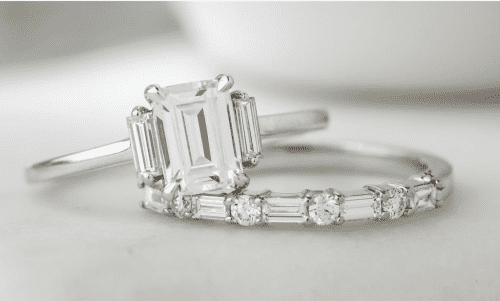
Diamonds are often given as a gift of love and are associated with romance and affection. Receiving a diamond is seen as a special gesture that shows love and commitment. -
• Uniqueness
No two diamonds are exactly alike, making each one special and unique. People love having a diamond that is one-of-a-kind and reflects their individuality. -
• Glamour
Wearing a piece of diamond jewellery is the ultimate statement of glamour and luxury. Royalty, celebrities, and other public figures for generations have worn diamonds, making them a symbol of sophistication.
NOVELS TO READ ABOUT DIAMONDS

Apart from their elegance, durability and rarity; here are a few strong reasons for people’s love for diamonds –
-
• Emotional Connection
Diamonds often have sentimental value, as they may be given as a gift or passed down through generations. People often develop an emotional attachment to their diamonds, making them a treasured item in their jewellery collection. -
• Gift of Love
Diamonds are often given as a gift of love and are associated with romance and affection. Receiving a diamond is seen as a special gesture that shows love and commitment. -
• Uniqueness
No two diamonds are exactly alike, making each one special and unique. People love having a diamond that is one-of-a-kind and reflects their individuality. -
• Glamour
Wearing a piece of diamond jewellery is the ultimate statement of glamour and luxury. Royalty, celebrities, and other public figures for generations have worn diamonds, making them a symbol of sophistication.