Key Takeaways
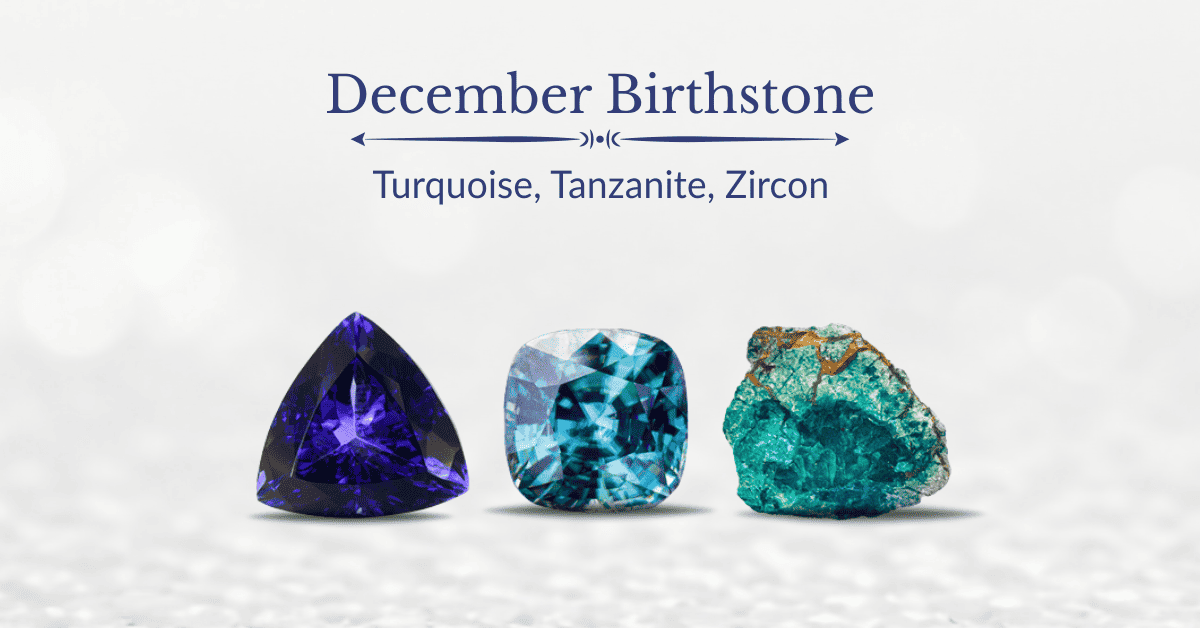
- December has three official birthstones: turquoise, tanzanite, and zircon, while blue topaz is a popular unofficial fourth option.
- Turquoise is known for its blue-green colour and its long history dating back thousands of years.
- Tanzanite is rare and found only in one place on Earth: the Merelani Hills in Tanzania.
- Zircon shines brightly and comes in many colours, and is the most durable of the three for daily wear.
- Each stone differs in hardness and care needs, so choose based on how you plan to wear it.
- Always ask for a certification report from an independent lab before buying.
Introduction
When selecting a December birthstone, you may find yourself pondering over a fascinating trio of tanzanite, turquoise, and zircon. These gems offer a kaleidoscope of colours, from the beguiling blue to the bluish purple of tanzanite, the vibrant blues and greens of turquoise, to the multicoloured marvel of zircon.
Each of these December birthstones presents its unique interpretation of the cherished blue hue. Whatever your colour preference, style or budget, we’re here to guide you in choosing the perfect December birthstone for yourself or a loved one.
What Is December’s Birthstone?
December has ‘three official birthstones: turquoise, tanzanite, and zircon’. All three have beautiful blue shades, but each one is different. Turquoise is blue-green, tanzanite is clear with a blue-violet shade, and zircon shines in many colors and often looks like a diamond.
Some modern birthstone lists also include blue topaz as an additional December option, though it isn’t part of the traditionally recognized gemological list.
If you were born in December, you can pick the stone that matches your budget, style, and everyday needs. You do not have to pick just one.
Is Blue Topaz Also a December Birthstone?
Many jewellery retailers list blue topaz alongside turquoise, tanzanite, and zircon among the birthstones for December. The traditional birthstone list includes only turquoise, tanzanite, and zircon as part of the three-stone tradition. Blue topaz has become popular because it’s more durable (8 on the Mohs scale) and cheaper than the other three.
The answer depends on which birthstone list you follow, as some recognize blue topaz while others don’t. Choose turquoise, tanzanite, and zircon if you want traditional and officially recognized December birthstones.
December Birthstone Turquoise: Significance and Rich History
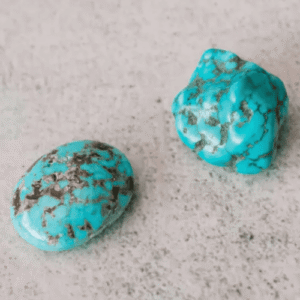
Turquoise, a semi-translucent gem featuring captivating blue and green hues adorned with intricate matrix veins, holds a rich history. Treasured for millennia, it was cherished by ancient Egyptian pharaohs and Chinese artisans over 3,000 years ago.
Believed to possess numerous beneficial powers, turquoise natural stone was considered a protective charm in the 13th century, believed to shield wearers from harm, particularly falls and was thought to shatter when danger approaches. Hindu mystics even maintained that glimpsing turquoise after sighting the new moon promised boundless wealth.
Astrological Benefits of Wearing Turquoise
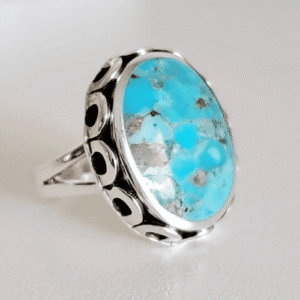
- Associated with the zodiac signs Sagittarius and Pisces.
- Believed to enhance wisdom, creativity, and spirituality.
- Brings peace and protection, promoting balance and harmony.
- Wearing turquoise can be beneficial for individuals seeking to improve their well-being.
Birthstone Turquoise: Geographic Roots

The fascinating turquoise gem, treasured for over 3,000 years originally hails from Iran’s Nishapur district, where its extreme blue types earned it the names “robin’s egg blue” or “Persian blue.” Its journey to other pockets of the world started through the historical trade routes, appreciably the Silk Road, attaining regions together with Egypt, Mesopotamia, the American Southwest, Central Asia, and subsequently, Europe, where it became a loved gemstone. Today, turquoise is mined globally, ensuring its persevered appeal and importance.
Turquoise Mining in the United States and China
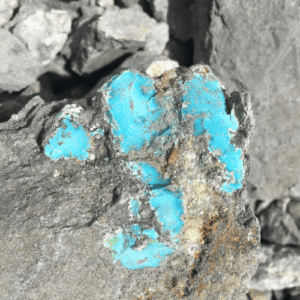
In the early 20th century, New Mexico led turquoise production in the United States. Today, Arizona and Nevada are the primary sources, with notable mines like Dry Creek, Easter Blue, Emerald Valley, and Fox. The Kingman Mine in Arizona is renowned for its intense blue turquoise.
China has emerged as the world’s largest producer of December birthstone turquoise. Hubei Province, in central China, is the primary source of gem-quality turquoise.
Caring for Your Birthstone: Turquoise
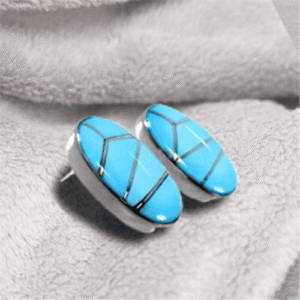
Caring for your turquoise birthstone is essential to ensure its lasting beauty. While turquoise has a Mohs hardness of 5 to 6, making it relatively delicate, some treatments enhance its durability, appearance, and polish. Dyed or chemically enhanced turquoise may have epoxy or acrylic resin additives to increase hardness or intensify colour. In some cases, cavities are filled with metal-loaded epoxy to mimic pyrite inclusions.
To care for your turquoise birthstone, keep away from harsh chemicals, severe temperatures, and daylight exposure. Store it separately, clean it with a tender, damp fabric, and don’t forget to restring or reset it as needed to prevent wear and tear harm.
December Birthstone Tanzanite: A Gem of Vibrant Discovery
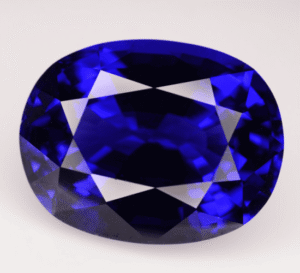
Tanzanite may be a relatively recent addition to the world of coloured gemstones, but it is undoubtedly one of the most exhilarating discoveries of the 20th century. Tanzanite’s journey began when blue stones found in Tanzania were identified as the mineral zoisite in 1962.
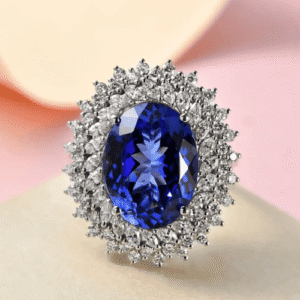
It wasn’t till 1967 that prospectors discovered the number one source of this December birthstone: the Merelani Hills. In honour of its Tanzanian origins, it was officially named tanzanite. The tanzanite birthstone is usually defined as “velvety” because of its deep, saturated colouration, ranging from natural deep blue to violet, with the blue variations being specifically prized.
Learn more about tanzanite and its properties.
Discovering the Origins of Tanzanite
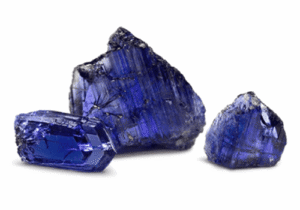
Tanzanite’s special source lies inside the Merelani Hills of northern Tanzania, making it the only area on Earth wherein tanzanite is mined commercially. The vicinity’s landscape, with its grass-included hillsides, scrub brush, rocky soil, and occasional bushes, sets the stage for tanzanite mining operations.
The mines reach depths of over one hundred metres (more than three hundred feet) into the earth, with the snow-protected slopes of Mount Kilimanjaro looming north of the mining sites.
Explore the ethical origins of gemstones with the assurance of SGL’s Origin Assure, a distinguished program certifying the ethical sourcing of diamonds.
Astrological Benefits of Wearing Tanzanite
- Linked to the zodiac signs Sagittarius, Pisces, and Gemini.
- Believed to accelerate attention, psychic capabilities, and a deeper connection with the universe.
- Thought to beautify the readability of thoughts and inspire personal and spiritual transformation.
- Wearing tanzanite is suggested for the ones looking for personal and religious growth.
Caring for Your Tanzanite: Birthstone
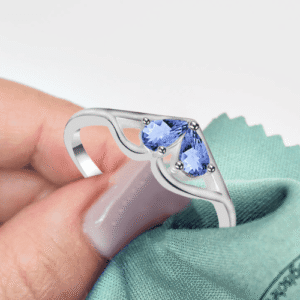
Tanzanite, with a hardness of 6 to 7 on the Mohs scale, displays quality resistance to regular warmth, light, and chemical materials. However, it can crack underneath exposure to severe temperatures or temperature fluctuations and is susceptible to abrasion. The gem is likewise at risk of hydrochloric and hydrofluoric acids.
To keep the lustrous appearance of tanzanite, take care to defend it from hot temperature changes, as it can be liable to cracking. Avoid exposing it to hydrochloric and hydrofluoric acids. To prevent abrasion, keep tanzanite rings one by one and consider periodic expert cleansing and inspection.
Make sure while investing in a gemstone, to get your Gemstone report from a trusted certification partner.
December Birthstone Zircon : A Gem of Diverse Colours
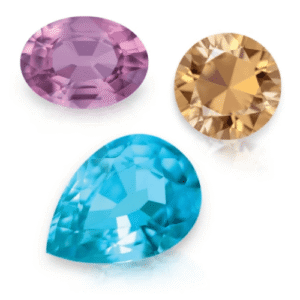
The term “zircon” has an intriguing etymology, with scholars debating its origins. Some suggest it stems from the Arabic word “zarkun,” signifying “cinnabar” or “vermilion,” while others point to the Persian word “zargun,” translating to “gold-coloured.” Given zircon’s vast array of colours, including red, orange, yellow, brown, green, and blue, either derivation appears plausible.
Colourless zircon stands out for its brilliance and the mesmerising multicoloured light it emits, known as “fire,” which has often led to its confusion with diamonds over the centuries.
Historical Significance of Zircon
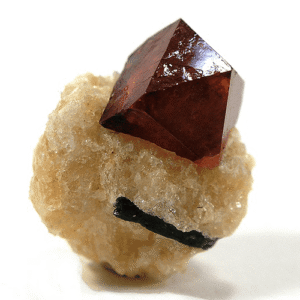
In the Middle Ages, zircon was believed to induce a deep slumber and ward off malevolent spirits. In Hinduism, zircon alternated with hessonite garnet as one of the nine gems of the Nava Ratna, worn together to safeguard the wearer and bestow wealth, wisdom, and good health. Victorian-era enthusiasts particularly favoured blue zircon, with fine specimens adorning English estate jewellery from the 1880s.
Zircon vs. Cubic Zirconia: They Are Not the Same Stone
People often mix up zircon with cubic zirconia, but they only have similar names. In reality, they are different.
- Zircon is a natural mineral that formed deep inside the Earth billions of years ago. People mine it as a real gemstone.
- Cubic zirconia is created in a lab to give people a more affordable option than diamonds.
Cubic zirconia is usually harder and much more affordable than zircon, so people use it in jewellery, while natural zircon has real gemstone value.
Before buying a December birthstone, make sure the listing says natural or treated zircon, not cubic zirconia.
Discovering the Origins of Zircon
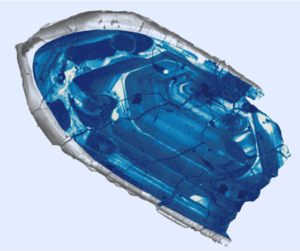
Sri Lanka, known for its wealth of gems, boasts a wide array of gem minerals, including sapphire in various colours, ruby, alexandrite, spinel, tourmaline, moonstone, and quartz. Among these treasures lies the December birthstone, zircon.
Elahera, a region in central Sri Lanka, serves as one of the country’s most prolific sources of this gem. The local landscape features mountains, jungles, and meandering streams, creating a striking backdrop for the extraction of this December birthstone.
Zircon Mining Around the World
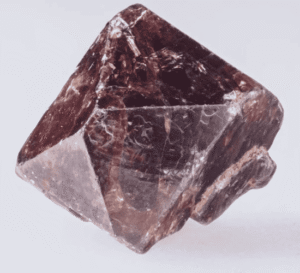
Australia’s Harts Range is renowned for producing zircon birthstones in an assortment of colours, including yellow-brown, orangy brown, pink, and purple. The region features open savannahs, dry stream beds, and low-lying hills that extend to the horizon. Zircon Hill is the number one mining site for this December birthstone.
Nearby, Alice Springs is renowned for its outback lifestyle, aboriginal artwork, and unique sporting occasions, consisting of regatta races held in dry river beds. Zircon is often found in proximity to sapphire sources, with Myanmar, Vietnam, and Cambodia being additional countries where the two gems coexist.
Astrological Benefits of Wearing Zircon
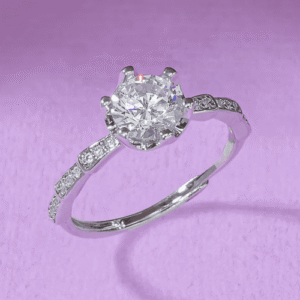
- Often related to the zodiacs Aries, Taurus, and Sagittarius.
- Believed to enhance self-confidence, awareness, and overall wellness
- Thought to deliver clarity and focus to one’s mind, boosting mental and emotional power.
- Wearing zircon is considered beneficial for those seeking mental and emotional empowerment.
Caring for Your Zircon Birthstone
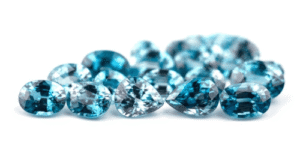
Zircon has a hardness rating ranging from 6 to 7.5 on the Mohs scale. It is frequently heat-treated to produce blue and colourless varieties, as well as orange, yellow, and red hues.
The gem is generally stable under normal light conditions, but some heat-treated stones may revert to their original colours (typically light brown) after prolonged exposure to bright light.
Exposure to extreme temperatures can alter the colouration of zircon varieties. The December birthstone is resistant to chemical substances but tends to abrasion.
Protect zircon from prolonged bright light exposure and high-temperature fluctuations, which can affect colour. Store them individually to save their abrasion, and wipe them with a gentle, damp cloth to maintain their brilliance.
Conclusion
You may love the turquoise birthstone for its history, the tanzanite birthstone for its rare violet color, or the zircon birthstone for its colorful sparkle. December gives you more birthstone choices than almost any other month. Every gem has its own story, hardness, and price, so the best December birthstone depends on how you want to wear it and the look you want.
Check out our full Birthstone Buying Guide to explore the meanings, history, and origins of gemstones for every month.